Explaining Antenna Gain and the Effect of Wrinkles
As some of my loyal readers have asked in my last post, what is antenna gain and why do wrinkles matter?
The answer to what is antenna gain is the signal strength that an antenna receives compared to what radio waves it gets. This is usually measured in decibels, a unit of intensity. The equation is as follows:
There are many different types of antenna. You may have seen a TV antenna, or the antenna on your car. These are Omni-directional antenna. However, an inflatable only needs to have one direction. Thus, it is a directional antenna.
Now that we know that we are dealing with directional antenna, we can ask the question, what sort of directional antenna best suits our needs?
One type of directional antenna is a parabolic. This is the simplest structure with the largest surface area. Why parabola?
The answer to what is antenna gain is the signal strength that an antenna receives compared to what radio waves it gets. This is usually measured in decibels, a unit of intensity. The equation is as follows:
- Where
- G is Gain,
- E is Antenna Efficiency, and
- D is Directionality
Because antenna efficiency is hard to change as it is limited by what you choose as your signal receptor, the only thing we can use to improve gain is directionality. Directionality, in short, is the amount

There are many different types of antenna. You may have seen a TV antenna, or the antenna on your car. These are Omni-directional antenna. However, an inflatable only needs to have one direction. Thus, it is a directional antenna.
| Omni-Directional v. Directional Antenna |
Now that we know that we are dealing with directional antenna, we can ask the question, what sort of directional antenna best suits our needs?
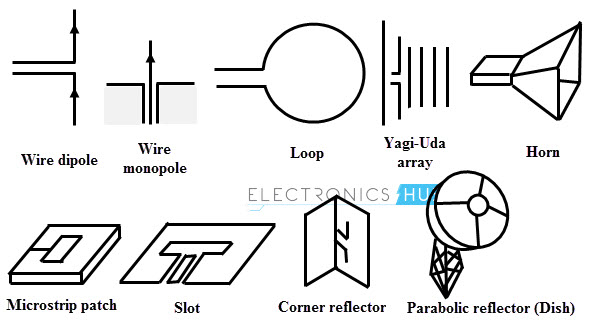 |
| Different types of Directional antenna. |
One type of directional antenna is a parabolic. This is the simplest structure with the largest surface area. Why parabola?
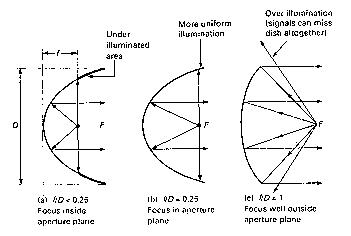 |
| A parabola converges at a focus |
Because a parabola converges at a focus, it can increase the amount of signal that the antenna receptor gets.
Why do wrinkles matter?
Antenna dishes operate sort of like mirrors or lens. After all, they both reflect electro-magnetic radiation. So what happens if you have a rough spot like a chip in your lens/mirror? The light will not reflect/refract well, and this is called an aberration. Such aberrations in lenses/mirrors are very similar to wrinkles in inflatables.
This comment has been removed by the author.
ReplyDeleteThis comment has been removed by the author.
ReplyDeleteEric, thanks for the explanation. Antennas like lenses and mirrors work with EM radiation. Parabolic antennas clearly have radii of curvature. Do they have something equivalent to a focal lengths?
ReplyDeleteNot really because focal length is an optical term. The reason why there isn't really a focal length is because we use parabolic dishes at a large distance from the signal source. Otherwise, we would not use the parabolic reflector and simply use an omni-driectional antenna that is based on a circuit arrangement.
DeleteYour description of the different types of antennas was very enlightening. I had no idea how much structure and geometry mattered.
ReplyDeleteThank you.
Delete